

ABNA24 - After years of trying various ways to deal blows to Iraq's resistance groups, the US has now embarked on its latest and most dangerous gamble yet, one that could push tensions between the two sides to a boiling point.
In this latest move, American officials announced they have arrested Mohammad Baqir al-Saedi, a leader of Iraq's Kataib Hezbollah resistance group, and transferred him to New York. In a statement, the FBI alleged al-Saedi plotted three attacks against Jewish schools and synagogues in the US.
The Justice Department further claimed that the resistance commander faces six terrorism-related charges tied to his role within Kataib Hezbollah. According to the indictment, he is accused of trying to recruit operatives to carry out attacks in New York, Los Angeles, and Scottsdale, Arizona. Additionally, in a chargesheet filed after Iran's 40-day war, prosecutors claim al-Saedi orchestrated attacks against US and Israeli interests, including the killing of American and Jewish civilians.
The case goes on to allege that he and his associates helped plan and coordinate at least 18 attacks in Europe and two in Canada. Ultimately, al-Saedi faces charges including two counts of conspiracy to provide material support to a foreign terrorist organization, two counts of providing such support, one count of attempted bombing of a public place, and one count of destruction of property using explosives.
Potential response of resistance groups
Seen through the eyes of some analysts, al-Saedi's arrest is not just a legal case, it could mark the starting point of a new round of confrontation between the US and Iraq's resistance groups. Over the years, these groups have consistently described Washington's military presence in Iraq as an occupation and have declared the full withdrawal of American forces one of their primary goals. As such, transferring al-Saedi to the US will be framed by resistance factions as an aggressive act and part of Washington's direct war against the Axis of Resistance.
In this climate, the most likely scenario is a resurgence of drone and rocket attacks on American bases in Iraq, especially military facilities in the Kurdistan Region. The past few months have shown that resistance groups are capable of carrying out low-cost, attritional strikes against American interests.
During the recent Iran war, these groups not only launched continuous attacks on US bases and assets inside Iraq but also expanded their reach beyond the country's borders, hitting American-linked positions and facilities in Kuwait and even Saudi Arabia. That campaign was designed to demonstrate the depth of their operational reach and raise their deterrent credibility. Now, if tensions escalate, that same operational pattern could be reactivated, pushing the conflict beyond Iraq's security framework.
Alongside military options, political pressure on Iraq's new government is also likely to intensify. Factions close to the resistance may demand that Baghdad speed up the withdrawal of American troops and scale back security cooperation with Washington.
Regional countries' potential role
Perhaps the most sensitive aspect of this case is the ambiguity surrounding where al-Saedi was actually arrested. While the exact details of how this Iraqi commander was taken into custody remain unclear, some sources suggest he was detained in a regional country, possibly Turkey, the UAE, or Jordan, and then handed over to the US.
If Turkey’s intelligence agency, the MIT, is proven to have played a role in this operation, relations between the resistance groups and Ankara will enter a far more tense phase. Even before this, their ties were already fragile, strained by a series of security and geopolitical disputes.
The Turkish military’s ongoing presence in Iraq and its repeated cross-border operations, along with Ankara’s support for Hayat Tahrir al-Sham and its close ties with Abu Mohammad al-Jolani in Syria, have long been seen by resistance factions as clear signs of Turkey’s interventionist policies, factors that, in their view, only deepen instability and insecurity in Iraq.
Therefore, if Ankara’s involvement in this case is confirmed, the resistance groups are expected to respond with sharp rhetoric and both political and field-based actions against Turkey. That could even endanger Turkish economic and security interests inside Iraq, pushing tensions beyond the political sphere and into operational, on-the-ground confrontations. Such developments could also drag relations between Baghdad and Ankara into a critical and highly volatile phase.
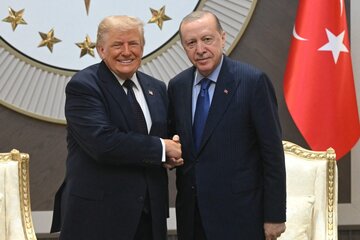
Some analysts suggest that the political rapprochement between Recep Tayyip Erdogan and Donald Trump may be one factor behind possible intelligence cooperation between Ankara and Washington in the arrest of this Hezbollah commander. With Turkey facing significant economic pressure, it may be seeking economic or political concessions from the US in exchange for security cooperation. If true, that could set the stage for even more complex dynamics in regional relations.
All in all, arrest of this Iraqi resistance commander is not just a purely security matter, but also it is a factor triggering a new period of tensions in the region. The US tries to send a message of power and deterrence doing so, but it at the same time risks intensifying the asymmetrical attacks on its interests in Iraqi and broader West Asia region. Now the eyes are on the resistance groups, the Iraqi government's stance, and the role of the regional actors, which can determine whether or not this case will turn into a vast security crisis.
/129


Your Comment